Abandoned Shopping Trolleys Need Better Technology
By Domenic Ammendolia, Founder and CEO, TDMN Pty Ltd
Latrobe City Council’s new Community Amenity Local Law has put abandoned shopping trolleys back in the spotlight. Retailers with 25 or more trolleys must fit each trolley with a functioning coin-deposit and release mechanism or an alternate locking mechanism.
Council is right to act. Abandoned trolleys create hazards, damage public spaces and leave retailers paying for collection, repairs and replacements. The question is whether the technology being installed actually solves the problem.
Wheel Locks Are Fitted but Trolleys Still Leave
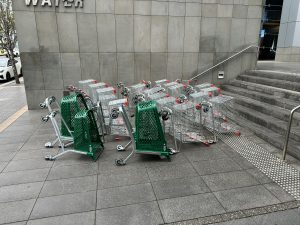
We regularly see trolleys fitted with wheel locks abandoned well outside a store boundary. That is the practical issue councils and retailers need to examine.
A wheel lock can deter some trolleys from leaving a site. If it does not activate, is damaged, is bypassed or the trolley is carried across the boundary, the retailer may have no visibility of what happened or where the trolley went.
Staff then wait for someone to report the trolley or search surrounding streets. A fitted lock does not prove that a trolley fleet is under control. The result matters.
Location Technology Changes the Recovery Process
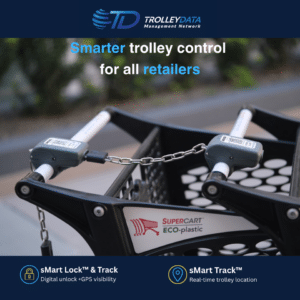
TDMN’s sMart Track™ gives each trolley a unique identity and reports its location through a live dashboard and service app. When a trolley is abandoned or taken beyond an approved area, the store team can see where it is and go directly to that location.
This removes much of the time spent searching street by street. The collection trip is faster and safer because the team knows where it is going before leaving the store.
For retailers that also need controlled customer access, sMart Lock™ combines a digital coinless lock with the same location capability. Customers unlock a trolley using a QR code and return it by reconnecting the chain. If the trolley is not returned correctly or is left outside the designated area, the system provides the information needed to recover it.
Councils Should Set the Outcome
Local laws should allow retailers to use any technology that can demonstrate effective trolley control. Councils assessing a system should ask:
- Does it alert the retailer when a trolley leaves an approved area?
- Can the retailer identify and locate the individual trolley?
- Can a collection team navigate directly to it?
- Does the system provide records that support accountability?
- Is the system practical for customers and store staff?
A policy that focuses only on whether a lock is fitted may miss the real objective: reducing the number of trolleys left in the community and shortening the time they remain there.
Retailers Need Visibility as Well as Deterrence
Retailers need to know how many trolleys they have, where those trolleys are and which ones require action. That information improves trolley availability at the store and gives managers evidence of how the fleet is being managed.
TDMN’s technology can be retrofitted to standard shopping trolleys. Retailers can select tracking or combined locking and tracking to suit each site. Tracking alone may not satisfy every local law that specifically requires a locking mechanism, so the exact council requirements must be checked. sMart Lock™ can be presented to councils for assessment as an alternate locking system with integrated tracking.
An Australian Developed Alternative Already Exists
TDMN developed its shopping trolley technology in Australia and now supports retail and transport operations in Australia and overseas. We built it around a simple operational need: if a trolley leaves, the retailer should know where it is and be able to recover it quickly.
Latrobe City Council is right to address abandoned trolleys. Councils and retailers should now assess all available technology and measure the outcome each system delivers. Wheel locks are one option, but they are not the only option.
If a trolley can get past the boundary and the retailer must wait for someone else to report it, a better system is available.
Common Questions
Do Wheel Locks Stop Abandoned Shopping Trolleys
Wheel locks can deter trolley removal when they activate correctly. They do not provide the trolley’s location if it leaves the site. A combined lock-and-track system adds visibility and supports direct recovery.
What Is Shopping Trolley Tracking Technology
Shopping trolley tracking technology identifies individual trolleys and reports their location to a dashboard or service app. Store teams can use that information to locate abandoned trolleys and plan collection trips.
Can TDMN Technology Replace Traditional Coin Locks
sMart Lock™ provides digital coinless access and integrated tracking. Whether it satisfies a particular local law depends on the wording of that law and the council’s assessment, so retailers should confirm compliance before deployment.
For councils or retailers assessing shopping trolley management technology, visit tdmn.com.au/product-and-services or contact TDMN to arrange a system review.